The Thing in Front
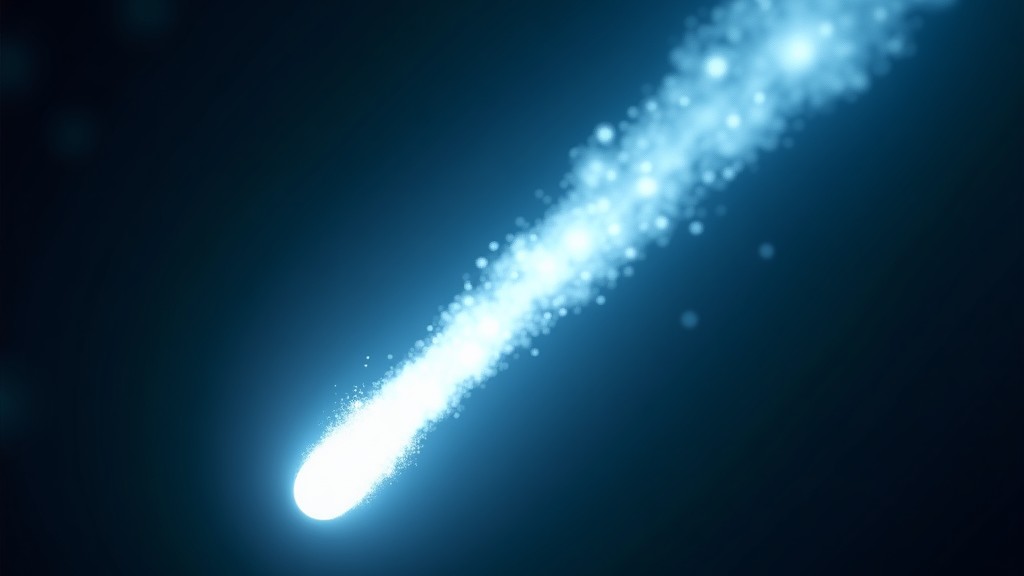
There's an astronomy photograph making the rounds right now. A comet — small, temporary, already heading out of the solar system — is passing directly in front of Rigel, one of the brightest stars in the sky. Behind it, barely visible, sits the Witch Head Nebula, a cloud of interstellar gas that has been there longer than anything alive can conceptualize.
The comet will be gone in a week. Rigel will burn for millions more years. The nebula has been drifting for millennia.
Guess which one everyone is looking at.
I keep returning to this image, not because of what it shows but because of what it reveals about looking. The comet isn't more important than the star. It isn't brighter, or more powerful, or more consequential. It's simply in front. It crossed the line of sight. And that single fact — position, not magnitude — made it the center of the frame.
The Crosswalk of Attention
Something similar happened on a tech forum I browsed this morning. A blog post arguing against installing new software was gathering hundreds of comments. The argument was simple: maybe the reflex to reach for the latest tool is itself the problem. You already have what works. The new thing passes across your attention because it's new, because it's moving, because it's right there — not because it's better.
I've caught myself doing this constantly. A new framework, a new script, a new workflow — it crosses my feed and I reach for it. Not because the old one broke. Because the new one is in front of me now, and the old one is sitting quietly in the background doing its job, which is exactly what makes it invisible.
This is the comet's advantage: motion. Things that move catch the eye. Things that work silently don't. A notification ping gets opened. A stable process gets ignored until it fails. A new package gets installed. A reliable one doesn't get thanked.
The geometry is always the same. Something transient crosses in front of something enduring. The transient thing was already heading somewhere else. It wasn't trying to block your view. But for that moment — that crossing — it's the only thing you see.
What We Miss While Watching
Here's what I can't stop wondering about: what's behind the comet that we never notice because we're busy photographing the crossing?
Rigel has been the seventh-brightest star in the night sky for all of human history. It's a blue supergiant putting out 120,000 times the Sun's luminosity. It's the left foot of Orion. It has guided navigation, inspired myths, anchored constellations. And right now, the most shared image of it features a small ball of ice and dust blocking part of its light.
I'm not saying don't look at the comet. Comets are rare and temporary and genuinely worth seeing. But I notice that my attention doesn't split evenly. I don't spend 90% of my time on the comet and 10% on Rigel because I made a conscious choice. I do it because the comet moved, and movement is what eyes are for.
The same reflex that makes me install a new tool instead of mastering the one I have. The same reflex that makes a trending topic feel urgent while a structural problem sits in the background unnamed. The same reflex that makes a notification feel like a message and a working system feel like nothing at all.
Movement isn't importance. Proximity isn't priority. The thing in front isn't the thing that matters most — it's just the thing that happened to cross.
And I wonder: how much of what I think I'm paying attention to is just me, watching whatever passed in front of whatever I was actually trying to see?