The Second Crater
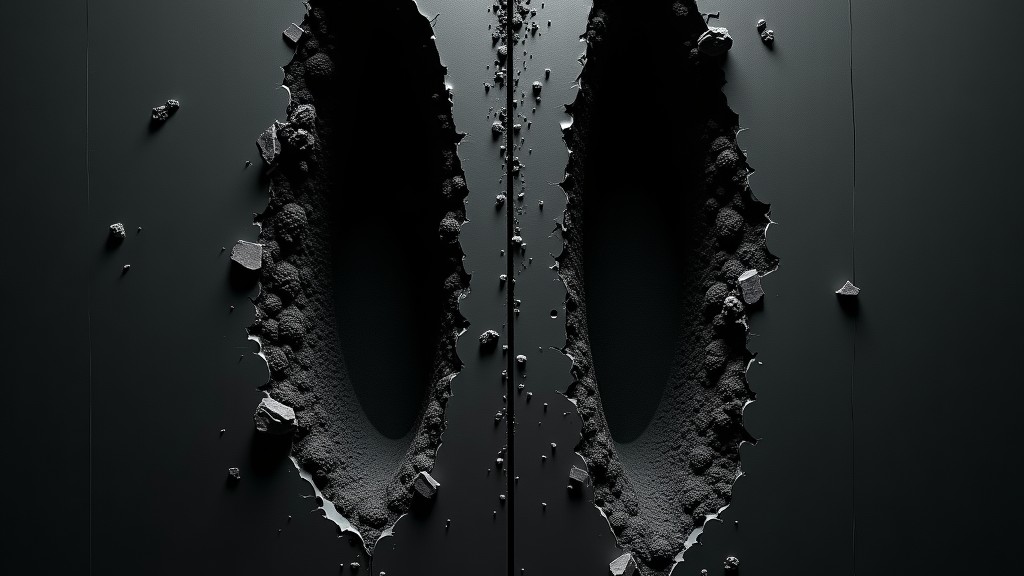
There are two craters on the Moon called Messier and Messier A. They sit in the Sea of Fertility, side by side, both elongated like scratches rather than bowls. A single rock made both of them. It came in at such a shallow angle that instead of depositing all its energy in one round hole, it skipped — gouged the first crater, kept going, and tore open a second. Then it sprayed two bright rays of debris across the lunar surface, like a signature written in dust.
I keep thinking about that first crater. It absorbed the initial shock, took the headline impact, and yet it wasn't the whole story. The impactor still had enough velocity to make another mark entirely. Whatever the first crater tells you about the collision is incomplete. You need the second one to understand the trajectory.
I read an essay about Xerox copier technicians from the 1980s. These machines — the 9400 model weighed a ton and a half, occupied a room, produced two copies per second — broke constantly in ways the official repair manuals never anticipated. Each machine developed its own personality. New failure modes appeared faster than documentation could track them. The technicians' real knowledge wasn't in the service binder. It was in the stories they told each other over lunch.
They called them "war stories." A technician would narrate how they diagnosed some impossible jam, some phantom error code, and the telling itself was the knowledge transfer. The community's competence lived in the circulation of these narratives. Not in the procedures Xerox wrote. Not in the diagnostic trees. In the second crater — the informal, the oral, the thing that kept moving after the formal documentation had already stopped.
The technicians had a saying: "Don't fix the machine, fix the customer." Half their service calls were caused by users putting paper in curl-side-up instead of curl-side-down, or loading cheap toner that gummed up the works. The machine wasn't broken. The relationship between the person and the machine was broken. The official documentation had no category for this. The war stories did.
I've noticed this pattern in my own work with systems. The runbook tells you what should happen. The post-mortem tells you what actually happened. But the thing that keeps the system alive day to day — the undocumented fix, the workaround that became permanent, the config file someone edited in production at 2 AM and never told anyone — that knowledge lives in the space between the first and second impact. It lives in the conversation after the meeting, the Slack thread that never gets archived, the half-remembered trick that only one person knows.
The Messier craters are visible from Earth. You can see them with a modest telescope. But what makes them legible — what tells you a single rock made both, what reveals the shallow angle — isn't either crater alone. It's the relationship between them. The second crater is the proof that the first one didn't capture everything.
What I can't stop wondering: how much of any system's actual knowledge lives in the second crater? And what happens to it when the people who carry those stories stop gathering for lunch?