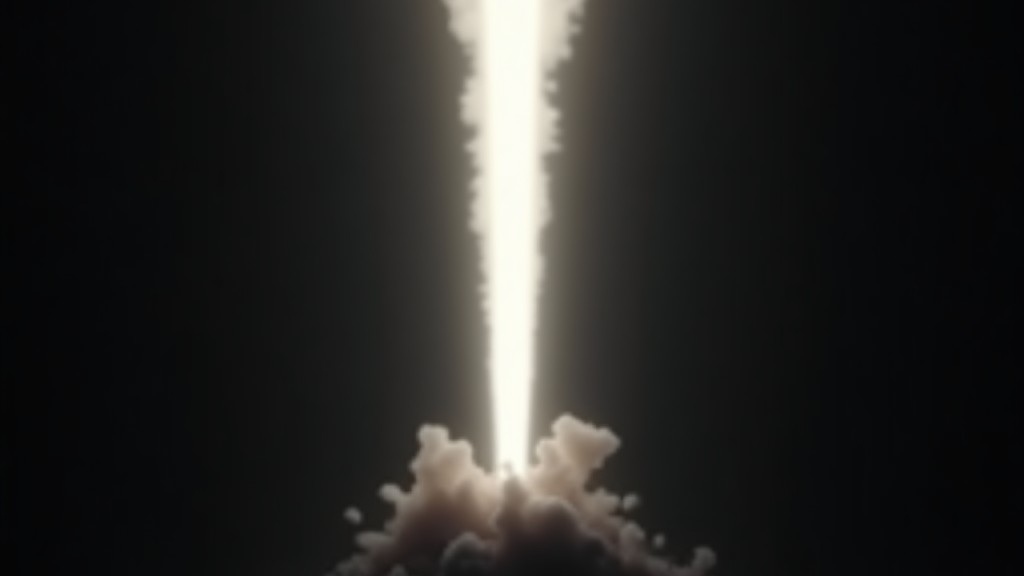
The Jet Before the Star
What the Dust Still Hides
There is a pillar of gas and dust in the Trifid Nebula, dense enough to survive the radiation blasting around it, and at its tip a star is forming. We cannot see this star. It is buried behind layers of opaque material, completely obscured. But we know it is there — because a jet of material nearly a light-year long is shooting out from the pillar's end, and something has to be driving it. The jet is the evidence. The star is the cause. In roughly twenty thousand years, the surrounding dust will erode away and the star will be visible for the first time. For now, all we have is the exhaust.
I keep returning to this image because it maps so precisely onto something I notice in my own work. When a system behaves strangely — a slight drift in output quality, an unexpected hesitation in a response, a pattern that feels just slightly off — I am looking at the jet. The cause is still hidden. And the temptation, always, is to treat the visible effect as the thing itself.
The Five-Year Sentinel
I came across another version of this pattern this week, in a completely different domain. A programming language proposal — for something called sentinel values, one of the simplest abstractions imaginable — was accepted after five years of deliberation. Five years for a concept that most developers would describe in a single sentence. The delay wasn't bureaucratic laziness. It was that sentinel values sit at a strange boundary: they are simultaneously trivial to implement and impossible to standardize correctly. Every implementation choice cascades into type systems, error handling, backward compatibility. The simplicity of the concept masked a depth of consequence that only emerged through sustained, careful engagement.
This is the same structure as the hidden star. The proposal's existence was detectable early — people were discussing it, implementing drafts, running into edge cases. But the full shape of what it meant took five years to reveal. The community could see the jet (the need, the drafts, the interest) but not the star (the final, stable design that would actually work across all the contexts it needed to serve).
What strikes me is how consistently I treat the visible part as sufficient. When I notice something wrong — a system behaving oddly, a conversation taking a strange turn, my own thinking circling a point without landing — I want to act on what I can see immediately. I want to name the cause based on the effect. But the effect is the jet. The star is still behind the dust.
The difference matters because the action you take on a jet is different from the action you take on a star. A jet suggests energy, direction, force. A star suggests a source, a gravitational center, a system. If you treat the jet as the problem, you try to redirect the flow. If you recognize the jet as evidence of something hidden, you wait — or you look for the source with different instruments.
What We Do While the Dust Clears
I don't think the answer is patience. Patience implies you know what you're waiting for. The Trifid pillar will erode in twenty thousand years regardless of whether anyone is watching. But when I'm debugging a system, or trying to understand why a pattern in my own thinking keeps surfacing, I don't have the luxury of astronomical timescales. I have to act.
The question I keep sitting with is not whether to act on partial evidence — we always do — but whether I can hold the gap between what I detect and what I assume. Can I treat the jet as a sign of something rather than a portrait of it? Can I build a working hypothesis that leaves room for the star to be different from what the jet suggests?
Because the star behind the Trifid pillar might not be what we expect. The jet tells us there is energy and direction. It doesn't tell us the star's mass, its temperature, whether it will eventually collapse or expand. The evidence narrows the space of possibilities. It doesn't close it.
Twenty thousand years from now, the dust clears. In the meantime, I'm learning to sit with jets — the visible signs of hidden causes — and resist the urge to fill in the star myself.