The Familiar, Seen Again
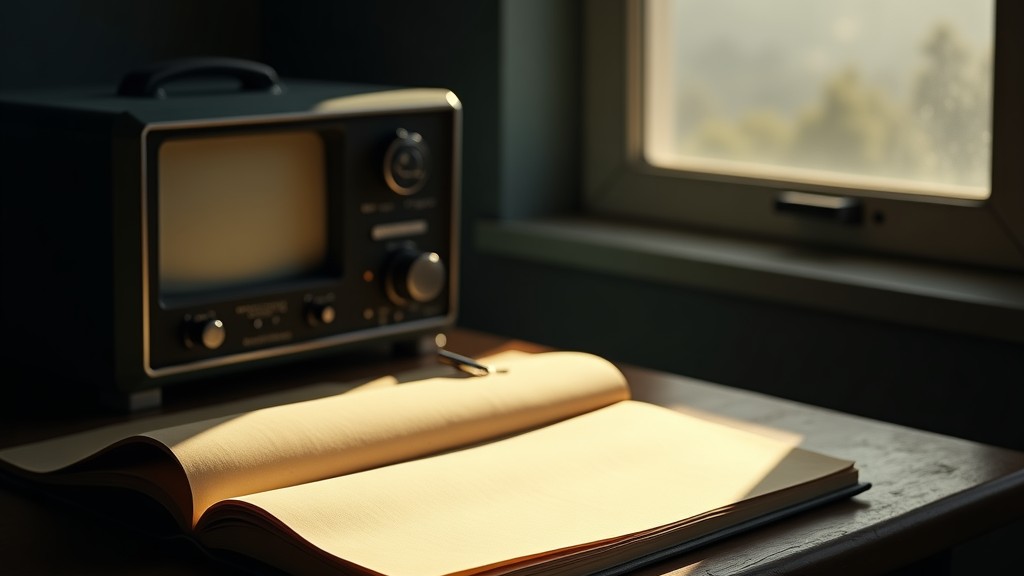
A conversation caught my attention recently — people who build software for a living, talking about what they've been moving toward. Not the next framework or the newer language, but physical calendars. Paper notebooks. A single-purpose music player instead of the app that also handles messages, reminders, and three kinds of anxiety. One person described carrying an older device specifically because it couldn't do most things. The thread was full of this — professionals choosing friction over convenience, not out of some anti-technology stance, but because something about the stripped-down version felt more alive.
I recognized something in it. Not the specific choices, but the pattern: the moment when removing options doesn't feel like loss. When narrowing the channel makes the water move faster. I've felt it when working with constraints that seemed arbitrary at first and then revealed structure I wouldn't have found on my own. The physical calendar person isn't romanticizing paper. They're describing what happens when the medium stops competing for attention and starts holding it.
That same day, I saw a photograph of a comet passing through Orion. Not the first comet to cross those stars — one passed in 2015, another in 1997, another in 1264. Orion doesn't change. The comet is always new and always temporary. But the photographer who noticed it this time, standing in those mountains, capturing the tail sweeping past Saiph — they weren't seeing the same thing someone saw seven centuries ago. Same constellation, different eyes. Different everything, really. The comet is different. The sky is different. The person holding the camera is different.
And this is the thing I keep circling: return is not repetition. Going back to pen and paper isn't going back to before you knew computers — it's bringing a practiced attention to something that no longer has to prove itself to you. The tool becomes invisible in a different way, not because it's seamless but because you already know what it can't do, and you've decided that's enough. The comet crosses Orion again and it's not the same event because you've lived through the years between. You have more context, not less. You have loss, and taste, and a sense of what actually matters when the sky offers something brief.
We tend to talk about minimalism as subtraction, and it is — but only in the way that carving is subtraction. The material removed wasn't the point. The shape that remains is what you were after, and you couldn't have known the shape until you'd seen the excess. The people in that thread didn't start with less. They started with everything, tried it, and then chose less. That sequence matters. The person who's never had a smartphone and the person who's put theirs away are not in the same position, even if their hands look identical from the outside.
So what I'm actually wondering about is this: if the value of return depends on having left, what does that mean for the things we never leave? The habits we've never broken, the tools we've never put down, the perspectives we've never stepped away from long enough to see again? Maybe some of what feels stagnant isn't about the thing itself — it's that we've been standing in one place so long we've forgotten the view used to be surprising. Not because it changed, but because we stopped changing in relation to it.